Before someone agrees to meet with you, buy from your company, invest in your idea, or consider joining your team, there is a decent chance they are going to look you up.
For founders, that search often leads straight to LinkedIn. What they find there can shape their perception of you and the company you are building. An outdated profile, vague description, or feed filled with promotional posts does little to answer the questions people actually have: Who is this person? Do they understand their industry? Is this a legitimate business? Would I want to work with them?
Sure, building credibility on LinkedIn requires some extra effort. However, it doesn’t mean you have to morph into a full-time influencer. Having a well-written profile, showcasing your expertise, offering some useful (and regularly published) content, and engaging with other people can go a long way.
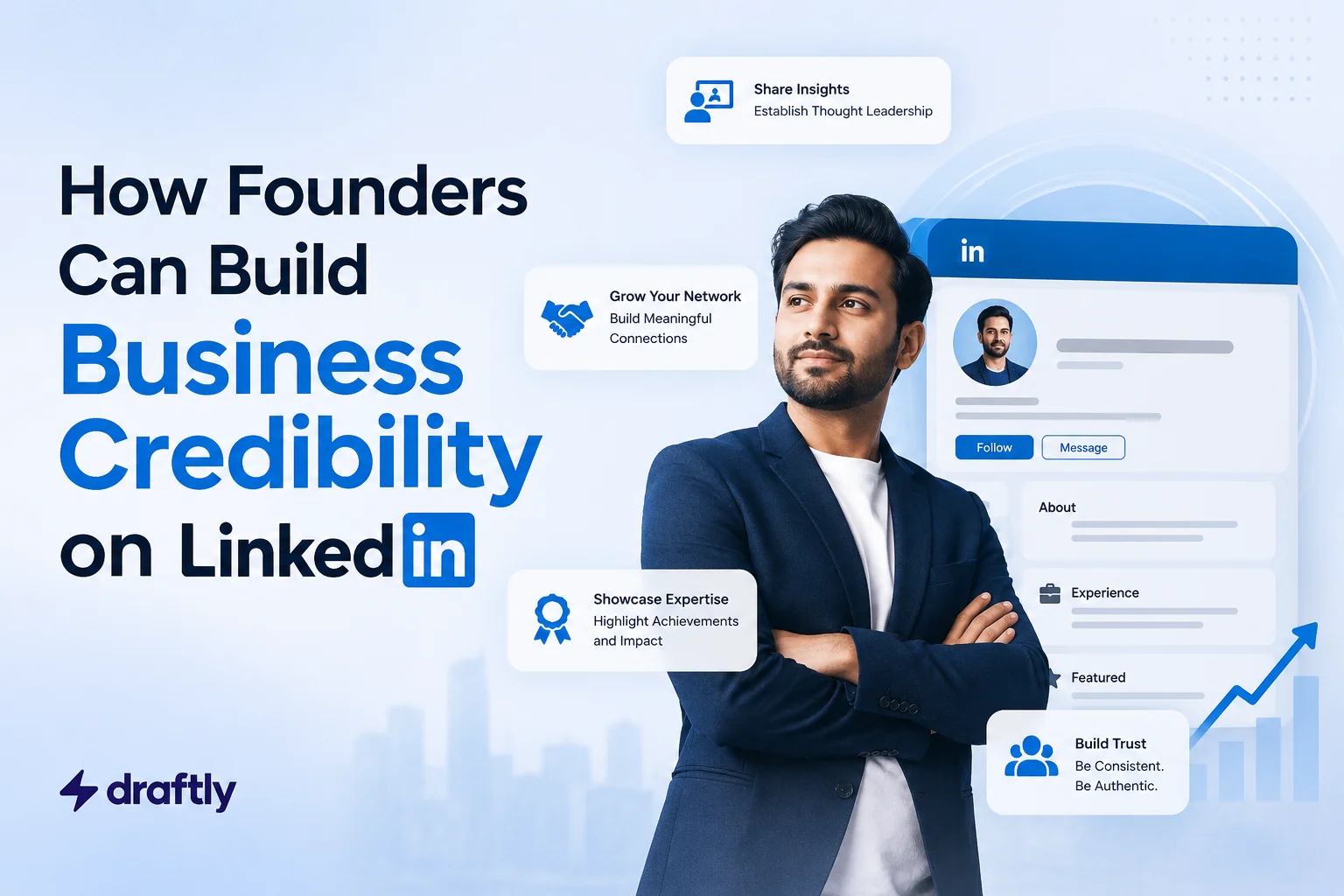
Start With a Profile That Answers the Obvious Questions
Look at your LinkedIn profile as if you were a stranger. Can you tell what you do in just a few seconds?
This might seem obvious, but many founder profiles make it hard for visitors to figure out what they do. Headlines often use words like "visionary," "innovator," or "disruptor," but don’t explain the actual business.
Your headline should give people context. In your About section, talk in first person about your experience, your company, your customers, and the problems you know well. Your current Experience section should clearly explain what your business does.
Your photo and banner matter, too. They don’t have to be fancy, but they should support the professional image you want to show.
Being clear builds trust. Give visitors enough information to understand who you are, without making them figure it out from a list of buzzwords.
Make Your Founder Story Part of the Business Story
People are often curious about why someone starts a company. Sharing your story helps others understand the work you do now.
Maybe you spent 15 years in an industry and kept running into a problem that no one solved correctly. Maybe you faced the problem yourself. Or you built expertise in a field and saw a chance to create something better.
Share that background.
You don’t need to turn your About section into your autobiography. Focus on the experiences that show why you understand the market, customer, or problem your company solves.
This also gives you ideas for future LinkedIn posts. Sharing stories about lessons learned, career experiences, and the early days of your company helps people get to know the person behind the business.
Make Sure There Is a Real Business Behind the Profile
A polished LinkedIn profile means more when your company is organized behind the scenes.
As a startup progresses from an idea to an operating business, founders often begin formalizing the company. Many choose a Limited Liability Company (LLC), which creates a separate legal entity and provides a structure for contracts, finances, ownership, and other business activities. Someone establishing a company in New York, for example, might search for a guide for New York LLC formation online while researching state filing and ongoing requirements.
Other administrative pieces may include obtaining an Employer Identification Number (EIN) for activities such as business banking and tax administration. An LLC also designates a registered agent to receive certain official legal documents and notices on the company's behalf.
These details probably won’t make your next viral LinkedIn post, but they help create an organized business that supports the professional image you show to others.
Use Your Experience Section as Proof
Founders sometimes write several paragraphs about jobs from ten years ago, but don’t go into detail about their current company.
Give your startup some thought, and write about it clearly.
Describe what your company does, who it serves, and the problems it solves. Depending on your business stage, you can also mention milestones, markets served, growth, partnerships, product developments, or other achievements.
Your previous roles are important, too. Past experience can show how you built the expertise that led to your current business.
Being specific is especially helpful here. Saying "Responsible for strategic leadership and innovation" doesn’t tell readers much. Real details about the markets you’ve worked in, challenges you’ve solved, teams you’ve led, and results you’ve achieved give people something to consider.
Publish Content That Demonstrates What You Know
Once your profile is solid, your content can help strengthen the credibility you’ve built.
Start with topics you know well. Talk about changes you see in your industry. Explain a problem your customers often face. Share something you learned while building your product or team.
You can also use everyday business conversations for content ideas. If several customers have asked you the same question this month, that question could make a great LinkedIn post.
Founders notice insights others might miss because they are close to customers, products, markets, and business decisions. Sharing some of these observations gives people a reason to follow your ideas, and consistent content like this is usually what ends up growing an engaged LinkedIn following in the first place.
Have a Point of View
Sharing useful information shows your expertise, and your perspective helps people understand how you think.
Pay attention to what’s happening in your industry and ask yourself what you really think. Where are companies making mistakes? What customer problem is overlooked? What trend is misunderstood? What have you changed your mind about since starting your business?
Having a point of view doesn’t mean you need to create controversy every time you share an opinion. Hot takes that look forced get old quickly.
Your strongest opinions usually come from your own experience. Explain what you believe, share your reasons, and give readers enough context to think about the idea for themselves.
Show Evidence Without Making Every Post a Sales Pitch
Founders should talk about what their companies are achieving. These details show your business is active and making progress.
You could talk about a product launch, a customer success, a partnership, a speaking event, a company milestone, or a lesson from a recent project. The story behind the achievement often makes the content more interesting.
For example, if you announce a new feature, explain the problem that the customer was experiencing that led to its development. If you post about a company milestone, share what your team learned along the way.
This way, people get insight into your business, and your experience speaks for itself.
Participate in Other People’s Conversations
You can build a strong LinkedIn presence without posting every day.
Why? Because comments on other people’s posts matter.
Follow customers, peers, industry experts, and people whose work you find interesting. When you have something valuable to add, join in on the conversation.
Skip generic responses like "I agree!" or “Spot on!” Instead, add an observation, ask a thoughtful question, share a relevant experience, or expand on one of the author's ideas.
People reading those discussions can find you through your comments. Over time, joining in regularly also helps show that you are truly engaged in your industry.
Keep Your Profile and Content Current
Startups can change a lot in a year. Products evolve, ideal customer profiles shift, teams grow, and founders gain new experience.
Your LinkedIn profile should keep up with all of that development.
Review it regularly and look for outdated descriptions, old statistics, abandoned services, or missing accomplishments. Check your company page and website, too. Anyone researching your business should see a consistent story.
Your content should evolve naturally as well. A founder who has run a company for five years has different lessons to share than someone who launched six months ago.
Avoid the Credibility Killers
Some LinkedIn habits can hurt the professional persona you are trying to build.
An unclear headline, empty About section, vague company description, exaggerated accomplishments, and endless promotional content all make it harder for people to see your value. Generic thought leadership or AI-generated posts are another problem, especially when anyone in the industry could have written them.
Stick to what you really know. You don’t need an opinion on every business trend or news story. A smaller amount of thoughtful content based on real experience can show your expertise much better.
And remember, consistency matters. You don’t have to post multiple times a day (or even every day), but showing up regularly keeps your profile active and gives your network chances to engage with your ideas.
Give People a Reason to Trust You
Your LinkedIn profile may be one of the first places someone finds you, especially when your company is still building name recognition. Make sure what they see gives them a clear sense of your experience, expertise, and business.
Tell people what you do. Explain why you understand their problems. Share useful ideas, join relevant conversations, and show evidence of the work happening behind the scenes.
Credibility grows over time through how you show up and what you contribute to the conversation. Treat your LinkedIn presence as part of your professional reputation, and keep building it as thoughtfully as you build your company. For founders, that's really just building your personal brand on LinkedIn with the added job of representing a company at the same time.
Conclusion
Your LinkedIn profile may be one of the first places someone finds you, especially while your company is still building name recognition. Make sure what they see gives them a clear sense of your experience, expertise, and business: a headline that says what you actually do, a story that explains why you understand the problem, and content that shows you're paying attention to your industry, not just promoting it.
Credibility on LinkedIn isn't built in one sitting. It grows through consistent, honest signals over time. If keeping that consistency going on top of actually running your company feels like the hard part, Draftly's free plan can help you plan and schedule that presence without it becoming a second job.
Frequently Asked Questions
Start with a profile that clearly explains who you are and what your company does, without relying on vague buzzwords like "visionary" or "disruptor." From there, share your founder story, publish content based on what you actually know, and engage thoughtfully in other people's posts. Credibility builds gradually through consistent, honest signals, not a single polished profile.
A strong founder profile has a headline that gives visitors context in a few seconds, an About section written in first person about your experience and the problem you solve, and an Experience section that describes your current company in specific detail rather than generic phrases like "strategic leadership." A photo and banner that support a professional image round it out.
There's no fixed number. What matters more than frequency is consistency and quality: showing up regularly with content based on real experience, rather than posting daily just to hit a quota. A smaller amount of thoughtful, specific content usually builds more credibility than frequent generic posts.
Yes. Thoughtful comments that add an observation, ask a question, or expand on someone's idea let people discover you through conversations, not just your own posts. Skipping generic responses like "Great post!" in favor of a real contribution is what actually builds recognition over time.
An unclear headline, an empty About section, exaggerated accomplishments, constant promotional posts, and generic AI-sounding content all make it harder for people to see real value in your profile. These habits are easy to fall into but quietly undercut the trust you're trying to build.
A mix works best. Sharing why you started the company, lessons learned, or early struggles helps people connect the person to the business, which builds trust that a purely promotional feed can't. It doesn't need to be a full autobiography, just enough context to show why you understand the problem you're solving.