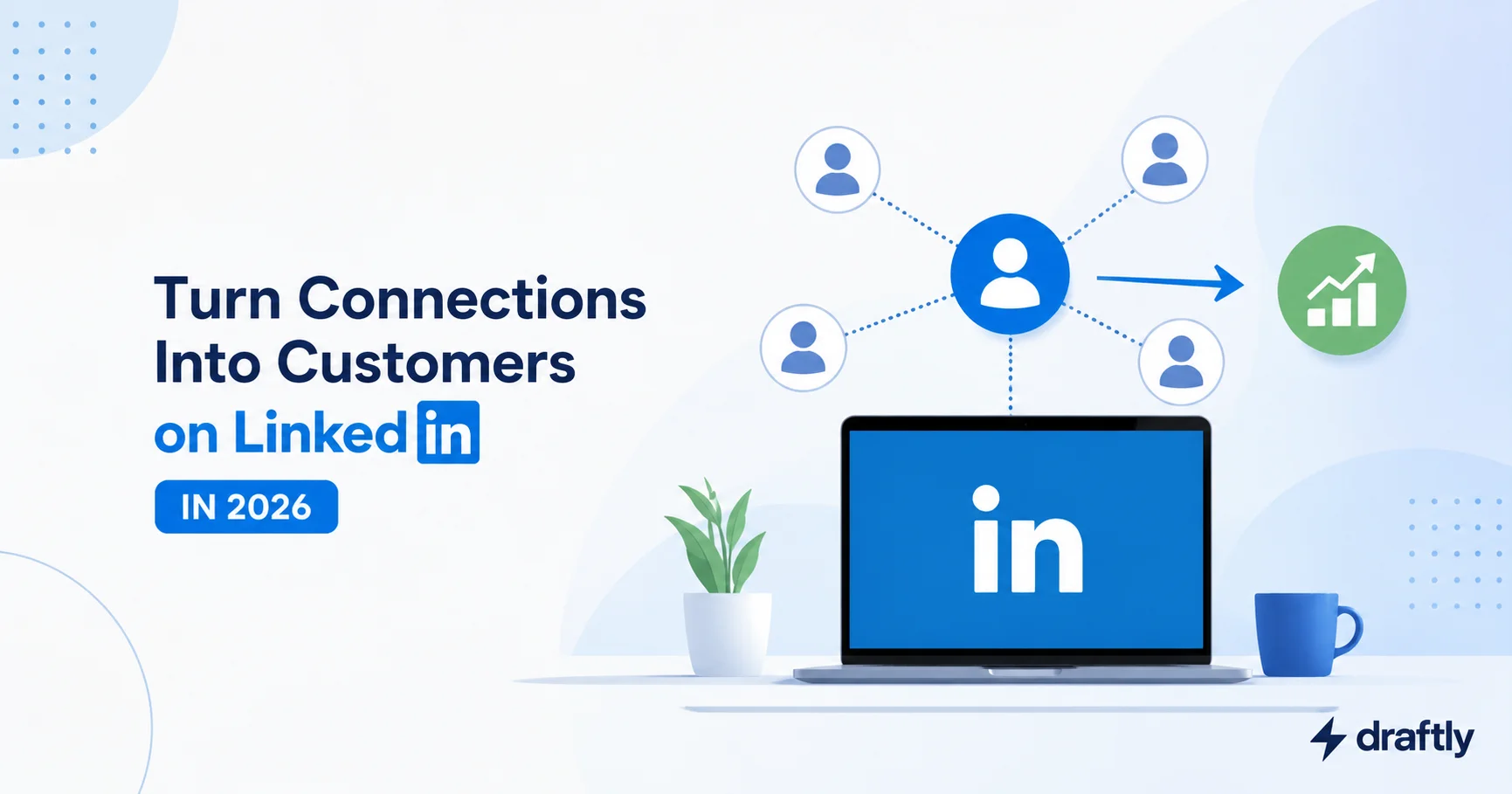
You didn't build a LinkedIn presence just to collect likes. You built it to find customers.
Here's the problem. Most people treat LinkedIn like a resume with a pulse. They post occasionally, accept connection requests, and hope something happens. Nothing happens. Meanwhile, 89% of B2B marketers already use LinkedIn for lead generation, and most of them will tell you it beats every other social channel by a wide margin. The gap between being on LinkedIn and actually generating leads there usually comes down to one thing: whether you're running a system or just showing up.
This guide walks through how LinkedIn lead generation actually works in 2026, which strategies are converting right now, and how to build a pipeline that doesn't depend on luck.
What Is LinkedIn Lead Generation?
LinkedIn lead generation is the process of finding, engaging, and converting your ideal prospects into leads using the platform's network, content, and messaging tools. About 62% of B2B marketers say LinkedIn generates twice as many leads as their next-best channel, and it's not hard to see why. Four out of five members on the platform have some say in business decisions at their company, so the audience you're reaching is already pre-qualified in a way most social platforms just aren't.
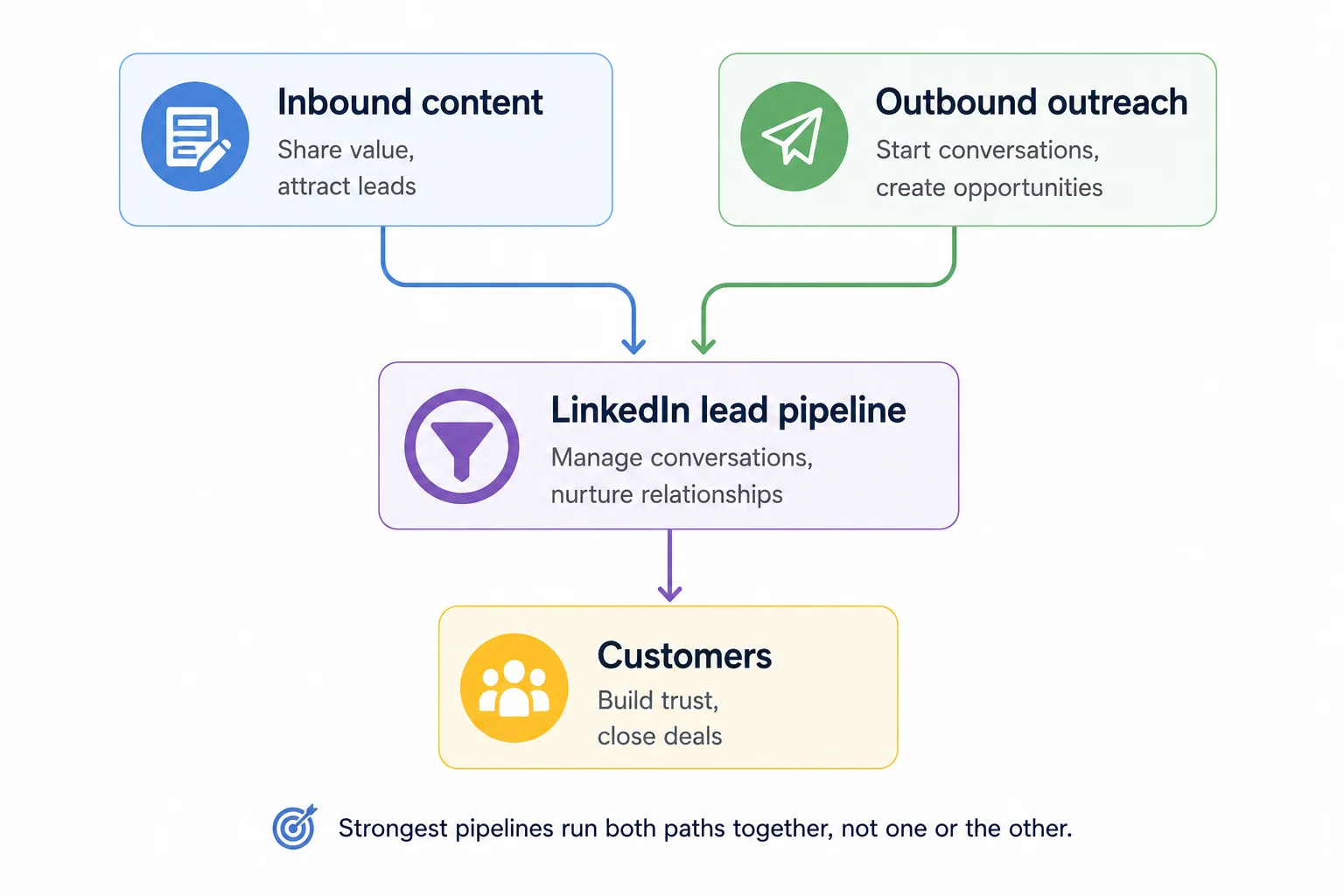
There are two broad approaches:
Inbound lead generation means publishing content that attracts prospects to you: posts, articles, comments that build your authority over time.
Outbound lead generation means proactively reaching out through connection requests, direct messages, and InMail.
The strongest LinkedIn lead generation strategies use both. Content builds trust at scale. Outreach turns that trust into actual conversations.
Why LinkedIn Works for Lead Generation in 2026
LinkedIn's algorithm still rewards genuine engagement over polish, which is why a well-timed comment often does more for your pipeline than a perfectly designed pitch deck. But the bigger shift in 2026 is sequencing. The old playbook of connect, then pitch, has mostly stopped working, and the numbers back that up. Generic cold messages convert at just 2 to 5%, while personalized, value-first sequences land replies at 15 to 25%.
The tradeoff is volume. LinkedIn is quick to penalize anything that looks automated or spammy, so scale has to come from smarter sequencing, not bigger blast lists.
Takeaway: precision and sequencing beat volume every time. Build your process around that instead of against it.
Core LinkedIn Lead Generation Strategies
1. Engage before you ever send a message
The best-performing outreach right now doesn't start with a connection request. It starts with a comment. Spend a week or two genuinely engaging with a prospect's posts before you reach out. By the time your connection request lands, you're already a familiar name instead of a stranger asking for something.
2. Build a multi-touch outreach sequence
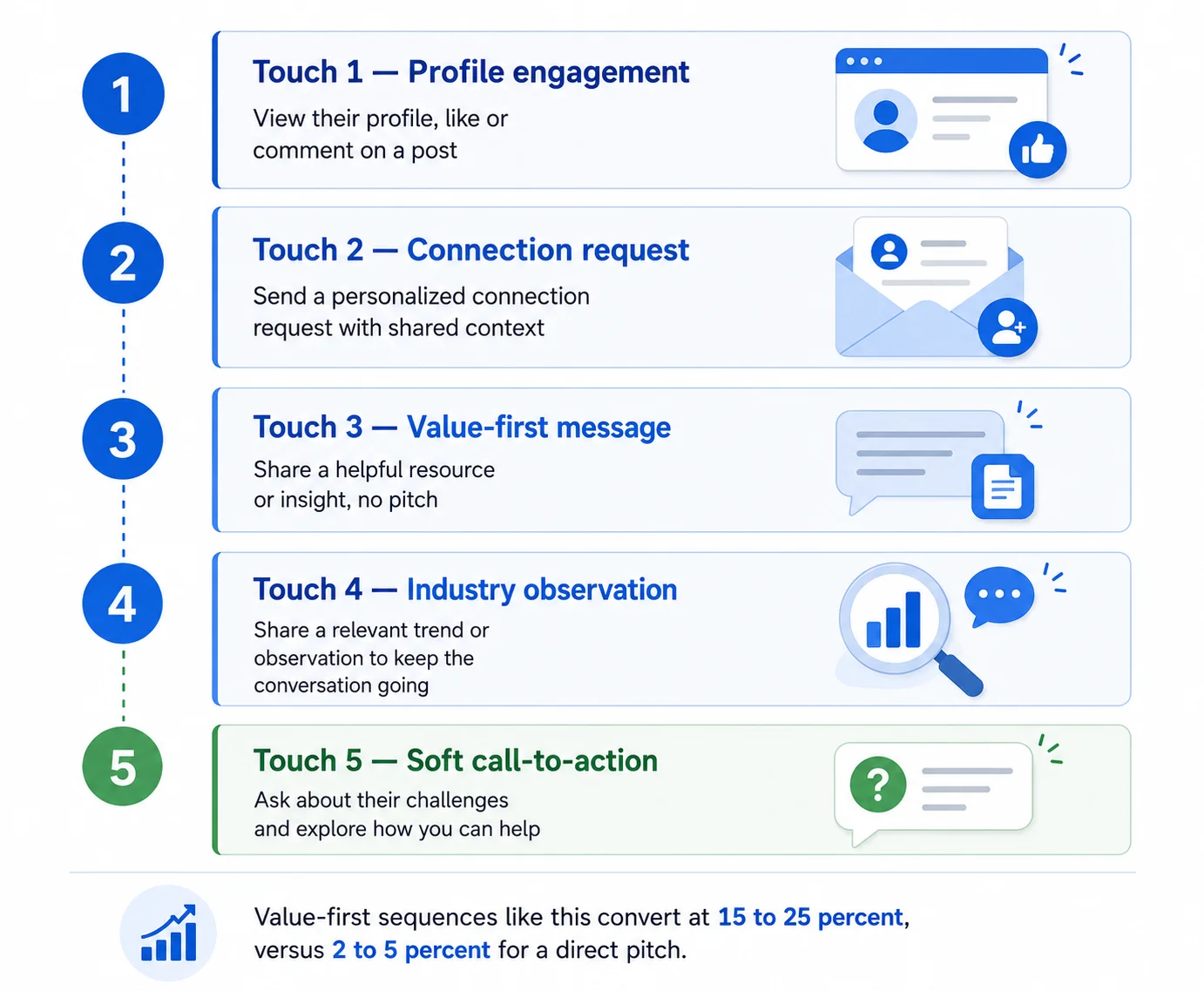
A single cold message is easy to ignore. A structured sequence, profile engagement, then a personalized connection note, then a value-first message with no pitch, then an industry observation, then a soft ask, is much harder to scroll past, because it earns credibility before it ever asks for anything.
Mini-script for the value-first touch:
"Hi [Name], saw your post on [specific topic] and really agreed with your point about [detail]. I put together a short breakdown of [related resource] that might be useful, no strings attached. Happy to send it over if it'd help."
Once a conversation like that gets moving, most of the work is just staying consistent instead of starting from a blank message box every time you need to follow up or check back in.
If your opening lines still read a little like a template pulled from a sales course, it's worth rethinking what actually gets a reply versus what gets ignored and archived before writing your next batch of messages.
3. Use Sales Navigator and account-based targeting for B2B
For B2B sellers, Sales Navigator changes the math. Its advanced filters let you build lists around your actual ideal customer profile (industry, company headcount, growth signals) instead of hoping the right people surface in a basic search. Account-based marketing takes it a step further: instead of chasing individual leads, you map three to five key stakeholders inside a target company (decision-maker, budget owner, technical evaluator) and build relationships across the whole buying committee at once. Teams running ABM on LinkedIn report engaging C-level prospects roughly twice as often as those running generic outreach.
It isn't free, so it's worth being honest about the return. A Forrester study found Sales Navigator typically pays for itself in under six months for people who actually use it, mostly through faster targeting and fewer wasted messages.
4. Publish content that attracts, not just announces
Every post is a low-pressure lead magnet if it's built around a real problem your ideal customer has, not a company announcement. Decision-makers actually spend time on this: over half say they read an hour or more of thought-leadership content a week. Carousels and short frameworks tend to outperform text-only posts because they hold attention longer, and that attention compounds. Comments turn into warm leads, and warm leads reply to DMs.
5. Automate the busywork, not the conversation
Manually messaging a hundred prospects a week isn't sustainable, which is why automation tools exist in the first place. The trick is using them to handle scheduling and tracking while keeping the actual sending and replying human. Not every platform plays by the same rules here either. Some handle scheduling responsibly, and some get accounts flagged fast, so it's worth knowing which is which before you commit to one.
Takeaway: automate the admin, not the conversation. LinkedIn, and your prospects, can tell the difference between a scheduled message and a scripted one.
6. Consider paid, but only once organic is working
If you have budget, LinkedIn's native Lead Gen Forms consistently out-convert sending traffic to an external landing page, since they pre-fill a prospect's details and keep them on-platform. Document-style ads in particular post noticeably higher completion rates than video or single-image formats. Still, paid works best as an amplifier for organic momentum you already have. Most brands need 90-plus days of consistent posting and outreach before organic lead flow becomes reliable, and paid doesn't really shortcut that groundwork so much as scale it once it exists.
LinkedIn Premium: Is It Worth It for Lead Generation?
Premium tiers unlock InMail credits, expanded search filters, and profile-view data, all genuinely useful for prospecting. But whether the upgrade is actually worth paying for really depends on how much you're already getting out of the free tier and how much outreach volume you're running. It's worth working through the math before you upgrade, especially if you're not sure the InMail credits alone justify the cost.
Common LinkedIn Lead Generation Mistakes
Pitching in the first message. Nobody wants to buy from a stranger in their inbox. Build rapport first.
Connecting without a plan. A pile of unengaged connections isn't a pipeline. It's just a number.
Targeting too broadly. "Marketing professionals" isn't an ICP. The tighter your targeting, the higher your reply rate.
Ignoring replies for days. Momentum dies fast in DMs. Reply while the conversation is still warm.
Treating every prospect the same. A template is a starting point, not a script to copy and paste verbatim.
Takeaway: most lead generation failures on LinkedIn come from treating it like a broadcast channel instead of a relationship channel.
Where Draftly Fits Into Your Lead Generation Workflow
Consistent, well-timed content is what makes outreach land differently. Prospects who've already seen you show up with useful posts reply to DMs far more often than the ones meeting you cold for the first time. That's really the piece Draftly is built for: planning and scheduling the content that keeps you visible between conversations, so every message you send is landing with someone who already recognizes your name.
Conclusion
LinkedIn lead generation works when you stop treating it like a numbers game and start treating it like a relationship system: engagement before outreach, sequences before pitches, and just enough automation to stay consistent without losing the human touch. If you want the content side of that running on autopilot, Draftly can help you plan and schedule the posts that keep your pipeline warm between conversations.