If your connection requests keep getting ignored, it's not you, it's almost always the message. Here's what actually gets a response.
Search around for how to network on LinkedIn and you'll mostly find two things: generic tip lists (optimize your profile, join groups, post content) and a pile of Reddit threads from people asking some version of "why does nobody ever respond to me." Both are missing the actual answer. Networking on LinkedIn fails for a pretty specific, fixable reason: most people skip straight to asking for something from someone who has no context for who they are yet.
Honestly, most of us have sent one of these messages at some point, the connection request with no note, or the one that pitches something in the very first line. It's not a character flaw, it's just a habit worth breaking, and once you see why it doesn't work, the fix is pretty straightforward.
Why Most Connection Requests Get Ignored
Picture the request you've probably sent, or received: a blank connection note, or one that pitches a product in the very first line. There's no shared context, nothing personal, and often an ask before there's even been a conversation. From the other side, that's indistinguishable from spam, even when the person sending it has genuinely good intentions.
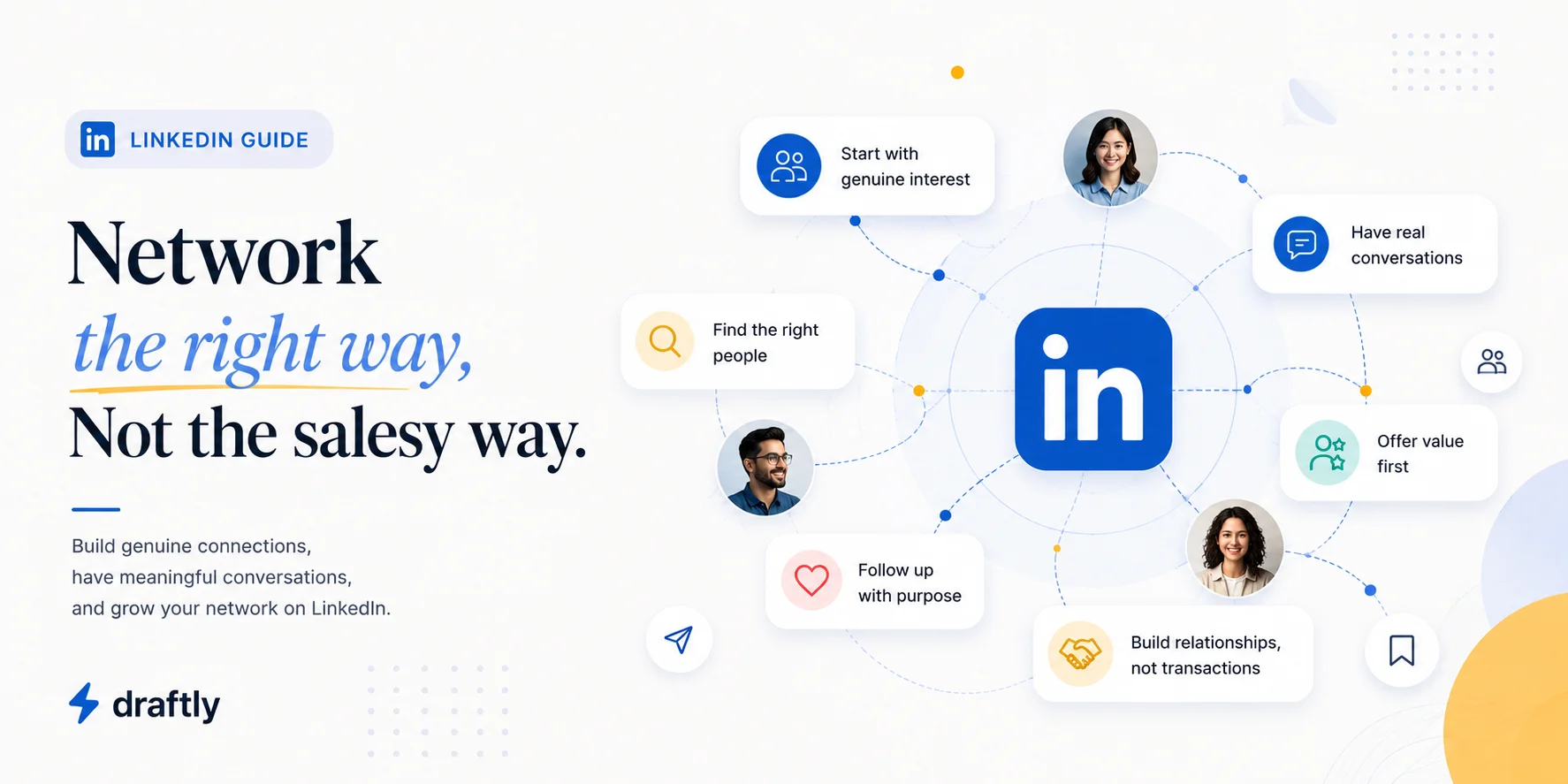
The fix isn't a cleverer opening line. It's sequencing. Real relationships, on LinkedIn or anywhere else, build in layers: a little context, then a little more engagement, then eventually a real conversation. Skipping straight to the ask is what makes the whole thing feel transactional, and transactional is exactly what gets ignored or declined.
It also helps to think about how this looks from the other side for a moment. Someone active on LinkedIn, especially anyone posting regularly or in a visible role, gets a steady stream of these requests every week. Most get a half-second glance before a decision gets made: familiar name or company, recognizable context, or delete. A request with zero context is asking that person to do the work of figuring out who you are and why you're reaching out, and most people simply won't, not out of rudeness, just because there's no real signal to go on.
A Sequence That Doesn't Feel Salesy
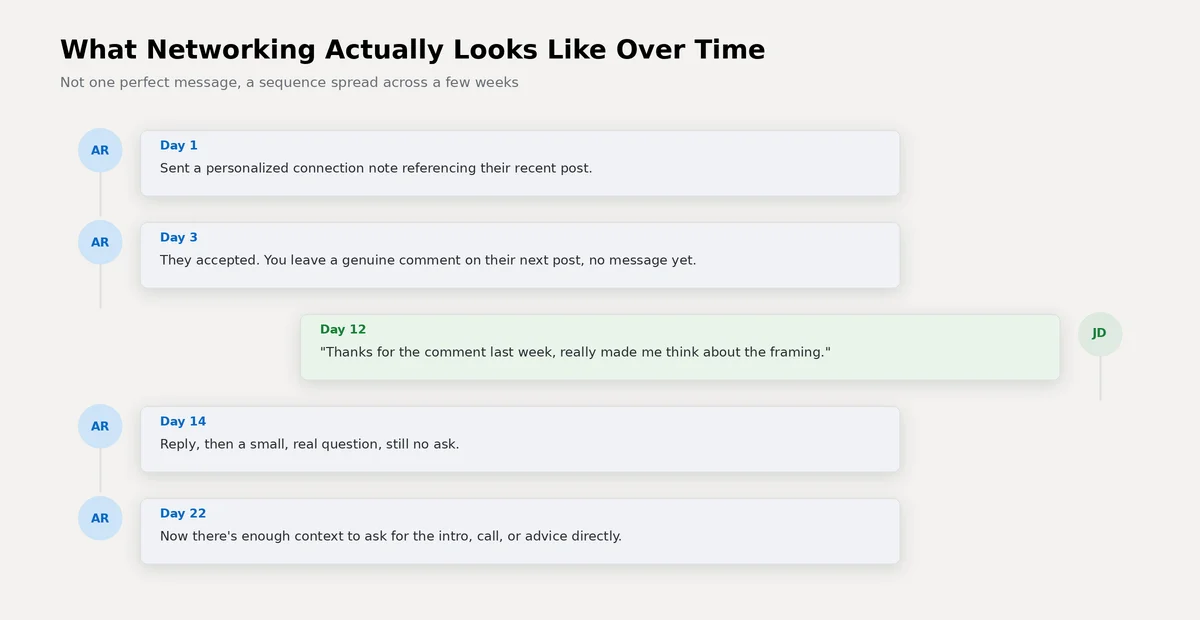
Comment first, connect second. Find something the person actually posted and leave a specific, genuine comment before sending a request. It gives you real context to reference and makes your name recognizable before it shows up in their notifications.
Personalize the connection note. One sentence referencing their post, their work, or a real shared connection is enough. It doesn't need to be clever, it just needs to prove you're not sending the same note to five hundred people.
Don't ask for anything in the first message. Not a call, not advice, not a demo. The first exchange is just for existing on each other's radar.
Let a little time pass. A week or two of small, genuine touchpoints, a comment here, a reply there, does more relationship-building than any single well-crafted message.
Ask once there's actual context. By the time you do ask for something, it's a natural next step in an existing conversation, not a cold request from a stranger.
What to Actually Say (and Not Say) in the First Message
Skip the templated opener entirely if you can. "I'd love to add you to my network" or "Great profile, let's connect!" reads as automated because it usually is, and most people can spot a copy-paste message within the first few words. Reference something real instead: a specific post, a mutual connection, a shared background, a talk they gave, anything that proves you actually looked at their profile before hitting send. One genuine sentence beats three generic ones, and it takes maybe thirty extra seconds to write.
Here's what that actually looks like rewritten. A first draft might read: "Hi, I saw your profile and would love to connect!" It's not rude, it's just invisible, the same sentence would fit literally anyone. A version with thirty extra seconds of effort: "Hi Priya, I saw your comment on the SaaS pricing thread earlier this week and agreed with your point about annual discounts training customers to expect them. Would love to connect." Same goal, same length, but now there's a specific, checkable reason behind it, which is exactly what makes it easy to say yes to.
Networking When You Actually Want Something
Sometimes you do need something specific: a job referral, an introduction, advice on a decision. That's completely fine, and most people are more generous with this than the internet's cynicism about networking suggests. The difference is in the ask itself. "Can I pick your brain sometime?" is vague and puts the work of figuring out the meeting's purpose back on them. "I'm considering a move into product marketing and saw you made that shift last year, would you be open to a 15-minute call about how you approached it?" is specific, low-effort to say yes to, and respects their time.
It also helps to remember that the person you're messaging was, at some point, on the other side of exactly this. Most people say yes to a well-framed, specific ask more often than you'd expect, not because they owe you anything, but because being asked something clear and thoughtful is genuinely easy to respond to. The vague, effortful asks are the ones that quietly get left on read.
Following Up Without Being Annoying
If someone doesn't respond to your connection request or first message, resist the urge to follow up within a day or two, and definitely resist sending the same message twice. People miss things, get busy, or just haven't gotten to it yet, and a second message too soon reads as pressure rather than patience. A week or two of silence usually just means silence, not rejection.
If it's genuinely worth a nudge, a single short follow-up referencing something new, another post of theirs, a relevant update on your end, works better than repeating the original ask. And if there's still no response after that, it's fine to leave it. Not every connection request needs to land, and chasing one that isn't landing costs more goodwill than it's likely to recover.
Quality Beats Quantity, for Real This Time
Crossing 500 connections used to matter for how a profile looked to strangers, but it doesn't do much for you if none of those people would recognize your name or reply to a message. A smaller network of people whose work you actually follow, who've seen your name in their notifications more than once, is worth more than a large one built entirely from unanswered requests. If you're not sure where to start, LinkedIn Groups in your specific industry are still a reasonable, underused way to find people already engaged in the same conversations you care about.
This is also where a lot of the frustration around networking comes from in the first place. Someone with 2,000 connections and no engagement on their posts often feels less connected than someone with 200 people who actually read what they write. The number on the profile was never really the point, it was always a rough proxy for reach, and reach only means something if the people on the other end are paying attention.
Staying recognizable to that smaller network usually comes down to showing up in their feed occasionally, not constantly. If keeping up a consistent presence on LinkedIn is the part that keeps slipping, that's a separate problem worth solving on its own, but it's the other half of the same equation as networking well.
Make Sure Your Profile Can Back It Up
Whatever sequence you follow, the person on the other end is going to click through to your profile before deciding whether to respond, so it's worth a quick honest look at what they'll actually see. A headline that says what you do rather than just your title and an About section that reads like a person wrote it cover what actually matters for a networking context specifically.
Going further than that, actually building a personal brand on LinkedIn, is a bigger, ongoing project involving content and positioning, not just these profile basics. But the basics are the part that decides whether someone responds to you this week, so they're worth getting right first.
None of this needs to be perfect before you start reaching out. A slightly unfinished profile with a real, specific connection request still beats a polished one attached to a generic pitch. But if someone clicks through and finds an empty About section or a headline that's just a job title, that's a small, avoidable reason for them to hesitate.
Conclusion
Networking on LinkedIn works the same way it does anywhere else: context before conversation, conversation before asking for something. Comment before you connect, personalize the request, hold off on any ask until there's actually a relationship there, and give it a few weeks rather than expecting one message to do all the work. It's slower than mass-sending requests, but it's also the version that gets responses.