A realistic, step-by-step answer, not just "post consistently and be authentic."
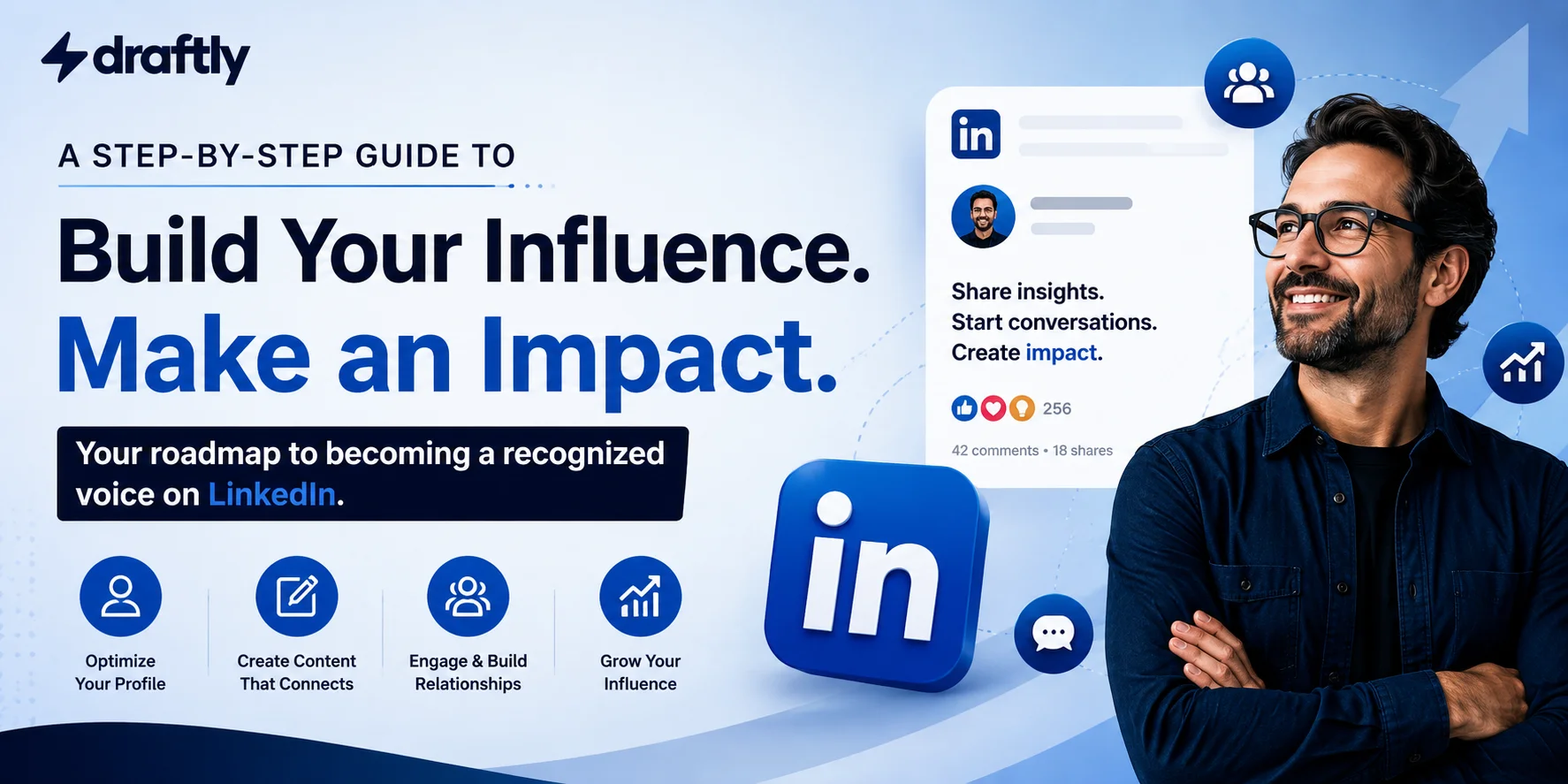
If you've searched how to become a LinkedIn influencer, you've probably already noticed that most answers online are vague: post consistently, be authentic, engage with your network. None of that is wrong, but none of it tells you what to actually do on a Tuesday afternoon when you're staring at a blank post box. This guide is the more concrete version: a real sequence of steps, specific post and comment formats to start from, and a way to tell whether any of it is actually working that isn't just watching your follower count.
Before the steps, it's worth clearing up one thing that trips up a lot of people searching this exact phrase: whether "becoming an influencer" requires being selected or invited by LinkedIn itself. It doesn't, but the confusion is reasonable, so it's worth addressing directly first.
The Official Program vs. Just Being Influential
LinkedIn's actual Influencer program is invite-only, includes roughly 500 people worldwide, and is made up mostly of recognizable public figures, business leaders, and a small number of platform-selected creators. It's not something you apply for, and there's no growth metric that unlocks it. Realistically, almost nobody reading a guide on how to become influential is going to receive that specific badge, and that's fine, because it's not actually what the phrase means for most people searching it.
What people actually mean by "LinkedIn influencer" is closer to being a recognized, trusted voice in a specific niche, something genuinely open to anyone willing to build it. That's what the rest of this guide walks through.
Step 1: Define a Niche and a Point of View
"I post about marketing" isn't a niche, it's a category with millions of people in it. A niche is specific enough that someone could describe what you talk about in one sentence: retention strategy for subscription SaaS, hiring for early-stage technical teams, pricing psychology for consultants. That's the subject. The part almost everyone skips is the second half: an actual point of view on that subject, not just information about it.
Plenty of people share genuinely useful information in the same niche and blend together completely. The ones who stand out usually disagree with something the rest of the niche takes for granted, or frame a familiar problem in a way nobody else quite does. That point of view, not the topic, is what makes someone follow you specifically instead of any of the dozen other people covering the same subject.
Step 2: Make Sure Your Profile Backs It Up
Once someone clicks through from a post or comment, your profile either confirms the perspective you just showed them or undercuts it. A headline that's just a job title, an empty About section, or a photo that doesn't match your current role all quietly work against everything else you're doing. This doesn't need a full overhaul, just enough that a first-time visitor immediately understands who you are and why they should take the post they just read seriously. If you haven't touched your headline or about section in a while, that's worth doing before you invest heavily in content.
Step 3: Post Fewer, More Memorable Things
Posting frequency matters less than most advice suggests. What actually works is starting from a small set of formats that reliably produce something worth reading, rather than freestyling from a blank page each time. Four that hold up across most niches:
- Story plus lesson: a short, specific moment from your work, followed by what it taught you. "I lost a deal because I skipped one question" works better than "communication is important."
- Problem, mistake, fix: describe something that didn't work, why, and what changed once you fixed it. This works because it shows the messy middle most advice skips straight past.
- Myth-busting: name a piece of conventional wisdom in your field and explain specifically where it breaks down. This only works if you actually disagree, forcing a contrarian angle you don't believe reads as hollow.
- Behind the scenes: show the actual process behind something you built or shipped, with enough specific detail that it couldn't be written by someone who hadn't done it.
One well-built post in one of these shapes tends to outperform several generic ones, since each format forces a level of specificity that generic "tips" posts skip entirely.
Step 4: Comment Your Way Into Other People's Audiences
This is the part most people skip entirely, and it's often faster than posting for building initial visibility. A genuine, substantive comment on someone else's post puts your name and thinking in front of their entire audience, some of whom will click through to see who wrote it. A few comment types that tend to land well: sharing a specific personal lesson related to their point, adding a piece of professional context you wouldn't usually give away for free, or offering a concrete comparison or before-and-after that makes their point more vivid. "Great point!" does none of this. For more on the actual mechanics of writing comments that get noticed, our guide to commenting on LinkedIn covers that specifically.
Step 5: Track Real Signals, Not Vanity Metrics
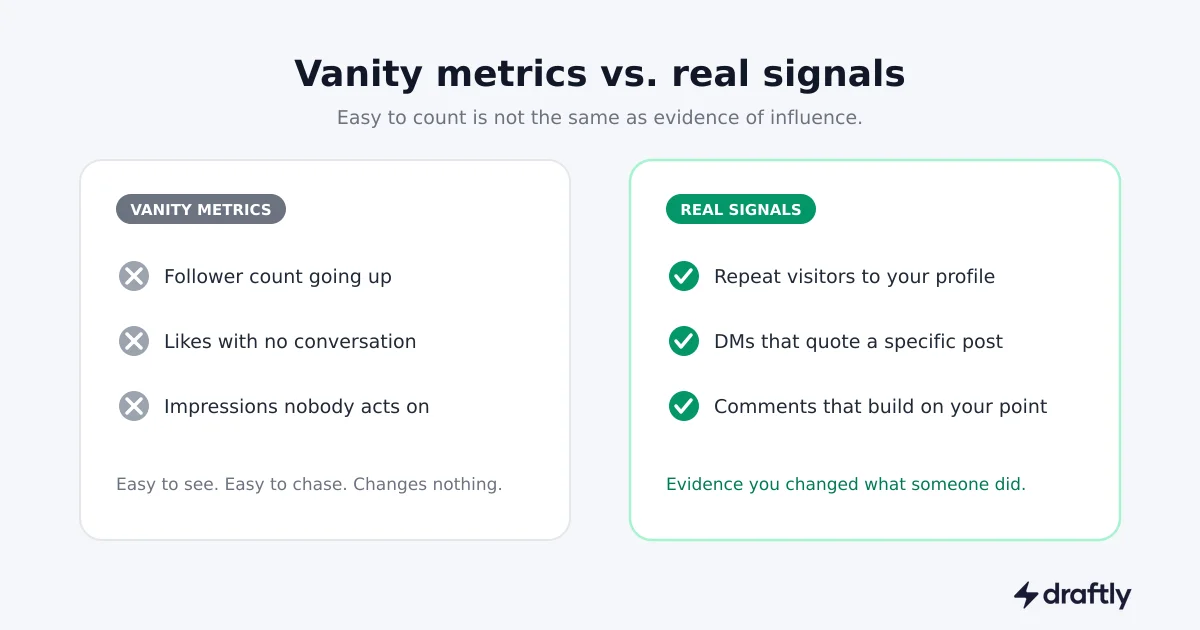
Followers and likes are easy to see, which is exactly why they get treated as the goal. A post with 40 likes and one comment saying "I used this exact framework in a client call yesterday, it worked" represents more real influence than a post with 400 likes and no comments at all. The first one changed what someone did. A few signals worth actually watching: repeat visitors to your profile (people who look you up more than once), direct messages that reference something specific you posted rather than a generic pitch, and comments that build on your point rather than just agreeing with it. None of these show up as a headline number anywhere on your profile, but they're the real evidence something you said changed how someone else thought or acted.
Step 6: Stay Recognizable Over Time
Once a few posts are working, it's worth noticing what they have in common, a particular structure, a visual style, a recurring way of framing ideas, and deliberately repeating it rather than reinventing your format every time. People start recognizing your content before they even see your name attached to it, which is a real advantage in a feed people scroll quickly. This is also where a a consistent posting rhythm earns its keep, since staying recognizable requires actually showing up often enough for a pattern to register at all.
How Many Followers Do You Actually Need?
There's no official threshold, and the number matters less than people assume. A genuinely engaged few thousand people in a specific niche outperforms a much larger, disengaged following, since the comment-and-DM kind of influence described above comes from people who actually read what you write, not from raw reach. Plenty of people with real influence in their specific field have audiences in the low thousands, not the hundreds of thousands. Aim for relevant before aiming for large.
Can You Make Money as a LinkedIn Influencer?
Indirectly, yes, though it rarely looks like the brand-deal model people associate with other platforms. The more common paths are consulting or freelance leads that come through your comments and posts, speaking or workshop invitations, and occasional sponsored content once an audience is large and specific enough to be worth a brand's attention. None of this tends to happen quickly, and it's generally a byproduct of being genuinely useful in a niche rather than something to optimize for from week one.
Conclusion
There's no single trick to becoming a LinkedIn influencer, and the official badge almost certainly isn't what you're actually after. What it actually takes is a specific niche with a real point of view, a profile that backs it up, a small set of post formats you can return to, a habit of commenting before you have an audience of your own, and tracking the signals that actually mean something. For how to network on LinkedIn alongside building this kind of visibility, and for the fuller picture of building a personal brand beyond just influence specifically, our guide to building a personal brand on LinkedIn covers the rest of it.