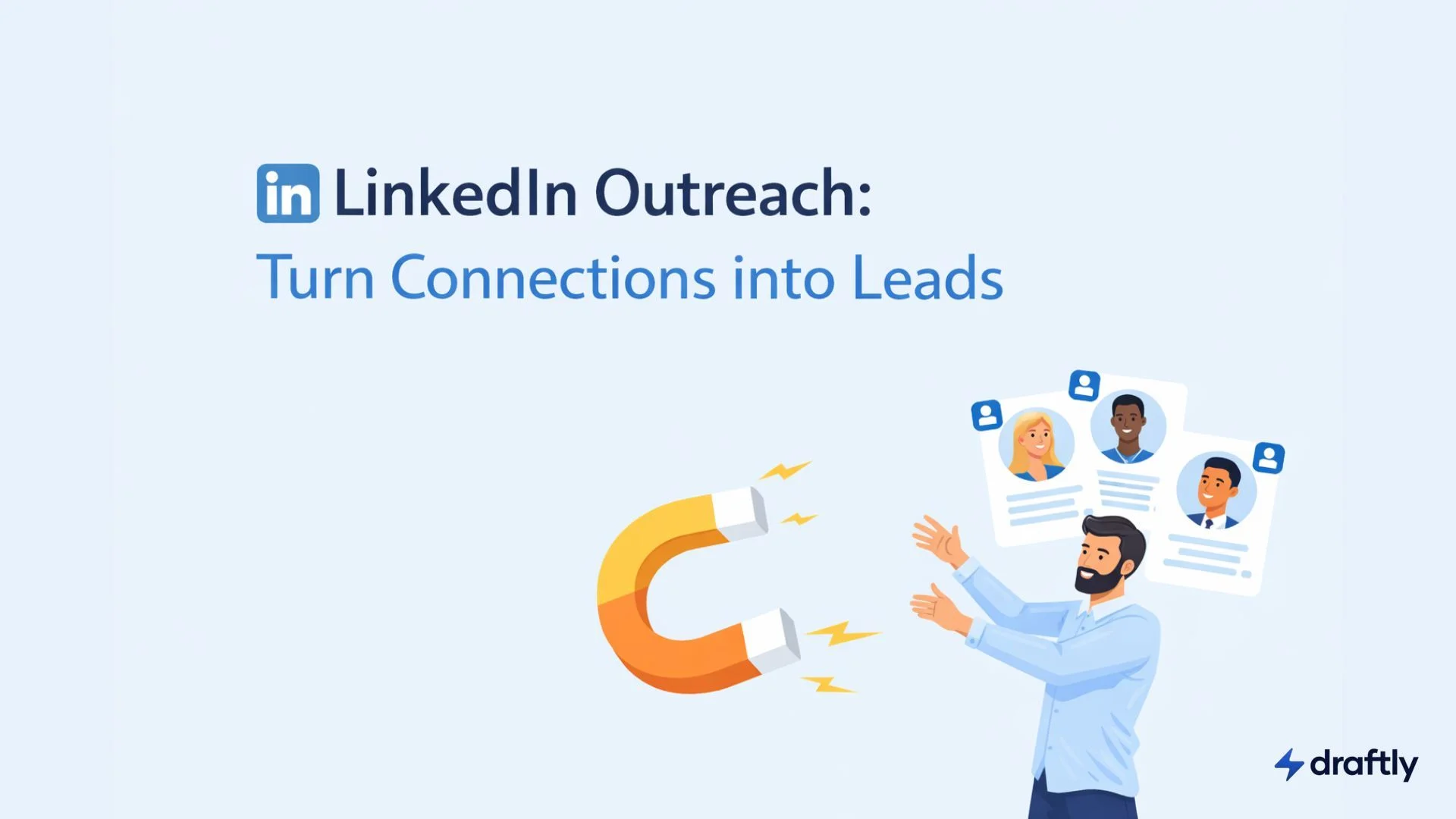
You have 800 connections on LinkedIn. Maybe even 2,000. But your inbox is quiet, your pipeline is dry, and you are wondering why none of those connections are turning into actual business.
You are not alone. Most people collect LinkedIn connections the same way they collect business cards at events, with zero follow-up and zero plan.
The good news? You do not need to be a sales expert or a smooth talker to fix this. You just need a simple, repeatable outreach strategy that feels human and gets results. That is exactly what this blog is going to walk you through.
Why Most LinkedIn Outreach Falls Flat
Before we get into what works, let us talk about what does not.
Think about the last cold message you got on LinkedIn. It probably went something like this:
"Hi [Name], I came across your profile and was really impressed. I help companies like yours increase revenue by 3X. Would you be open to a 15-minute call this week?"
Delete.
The problem is not that the person reached out. The problem is that they skipped every step that makes outreach actually work. There was no warmth, no context, no reason for you to care. It felt like a copy-paste job, because it was.
People buy from people they trust. And trust takes more than one cold message to build. So the goal of LinkedIn outreach is not to pitch immediately. It is to start a real conversation first.
Step 1: Get Your Profile in Order Before You Reach Out
This is the step most people skip, and it kills their results before they even start.
When someone gets a message from you, the first thing they do is click on your profile. If your profile looks half-finished or confusing, they will not reply. Simple as that.
Here is what your profile needs before you start any outreach:
A clear headline. Not just your job title. Tell people what you actually do and who you help. "Helping SaaS founders grow organic traffic through content" is far more compelling than "Content Strategist at XYZ Agency."
A friendly, professional photo. No blurry selfies. No group photos where people have to guess which one is you. Just a clean, clear headshot where you look approachable.
An about section that speaks to your audience. Write it like you are talking to one person. What problems do you solve? Who do you work with? What should someone do if they want to connect with you?
Recent activity. If your last post was from 14 months ago, people will wonder if you are even active. You do not need to post every day, but a few recent pieces of content build credibility fast.
Once your profile is in good shape, you are ready to start reaching out.
Step 2: Build a Targeted List of the Right People
Random outreach gets random results. Before you send a single message, you need to know exactly who you are trying to reach.
Get specific. Instead of thinking "I want to connect with marketing people," think "I want to connect with marketing managers at B2B software companies with 50 to 200 employees."
LinkedIn is surprisingly powerful for this. Use the search filters to narrow down by industry, job title, company size, and location. You can even search for people who follow certain thought leaders or work at specific companies.
Save time by building a list of 30 to 50 people at a time rather than searching and messaging one by one. Note down their names, companies, and anything interesting you notice about their profiles. That last part is important, because you will use those notes when you write your messages.
One thing to keep in mind: connection requests have a weekly limit, so do not try to blast everyone at once. Quality over quantity always wins here.
Step 3: Warm Them Up Before You Send a Message
This is the part of LinkedIn outreach that most people completely ignore, and it makes a massive difference.
Before you send a connection request to someone, spend a week or two doing small, genuine interactions with their content. Like a post. Leave a thoughtful comment. Share something they wrote if it actually added value to you.
This does three things. First, it gets your name in front of them before you ever reach out. Second, it shows that you are a real person who actually engages with content. Third, it gives you something natural to reference when you do send a message.
You do not need to spend hours on this. Ten to fifteen minutes a day, leaving three or four genuine comments on posts from people on your target list, is enough to make a real difference.
Think of it like bumping into someone at a conference a few times before asking for a meeting. By the time you actually reach out, you are not a stranger anymore.
Step 4: Send a Connection Request That Gets Accepted
When you finally send that connection request, add a short note. Always.
The note does not need to be long. In fact, shorter is better. You just need to give the person one good reason to accept.
Here are a few approaches that work well:
Reference something specific: "Hi Sarah, I saw your post about B2B email sequences last week and it was genuinely useful. Would love to connect and follow your content."
Mention a mutual connection or group: "Hi James, we are both in the SaaS Founders community and I have noticed your posts a few times. It would be great to connect."
Be direct about why you want to connect: "Hi Priya, I work with HR tech companies and your content on talent retention is always worth reading. Happy to connect if you are open to it."
Notice what none of these do. They do not pitch anything. They do not ask for a call. They do not mention your product or service. The only goal of the connection request is to get connected. That is it.
Step 5: Start the Conversation the Right Way
Once someone accepts your request, do not rush in with a pitch. This is the single biggest mistake people make.
Wait a day or two. Then send a short, friendly message that opens a conversation without any agenda attached to it.
Something like: "Thanks for connecting, [Name]. I noticed you recently moved into a Head of Growth role, congrats on that. How are you finding the shift so far?"
Or: "Hey [Name], really enjoyed that thread you posted about content repurposing. Do you find short-form or long-form tends to drive more engagement for your audience?"
These messages do one simple thing. They show genuine interest and invite a reply. You are not selling anything. You are just talking to a person.
If they reply, great. Keep the conversation going naturally. Ask follow-up questions. Share your perspective when it is relevant. Let the relationship develop over a few exchanges before you bring up what you do.
Step 6: Use Email Outreach to Support Your LinkedIn Strategy
Building strong connections often starts with a simple conversation, and LinkedIn makes that process easier. To build on that momentum, you can also bring email into your strategy.
After you have had a few good conversations on LinkedIn, you can ask if they would like to stay in touch over email as well. You might mention that you sometimes share more detailed insights or useful updates there and ask if they would be open to it.
Since you have already built trust, many people are happy to continue the connection.
Once you have their email, it becomes easier to stay consistent with your follow ups. Many businesses use tools like Klaviyo to manage campaigns and automate communication, especially when they want to reach a larger audience. In some cases, teams also explore Klaviyo alternatives to find features or pricing that suit them better.
The idea is not to replace LinkedIn, but to support it. LinkedIn helps you start the relationship, and email helps you stay connected and organized as that relationship grows.
Step 7: Know When and How to Bring Up What You Do
This is the part people either rush or avoid entirely, and both extremes hurt you.
There is no perfect script for this, but there is a good principle: bring up what you do when it feels naturally relevant to the conversation, not on a schedule.
If someone is telling you about a problem they are struggling with and it is something you can actually help with, that is your moment. You do not need a fancy transition. Just be honest.
"That actually sounds like something I help companies with. I work with [type of business] to [solve specific problems]. Would it be useful if I shared how we typically approach that?"
Notice the question at the end. You are not assuming they want your help. You are asking if it would be useful. That small shift in framing makes you sound like a helpful person rather than a salesperson.
If they say yes, you can move the conversation to a call or share more details. If they say not right now, that is totally fine. The relationship is still intact and you can circle back later.
Step 8: Follow Up Without Being Annoying
Most people give up after one or two messages with no reply. The truth is, most deals happen somewhere between the third and seventh touchpoint.
People are busy. Inboxes are noisy. A non-reply is almost never a hard no. It is usually just bad timing.
Here is a simple follow-up approach that works:
First follow-up: 3 to 5 days after no reply. Keep it short and light. "Hey [Name], just wanted to bump this up in case it got buried!"
Second follow-up: 7 to 10 days later. Add a little value this time. Share an article, a resource, or a thought that is relevant to something they care about.
Third follow-up: 2 weeks later. This one can be honest and direct. "Hey, I know timing is everything and this might not be relevant right now. Happy to reconnect down the line if things change."
After three follow-ups with no response, let it go. Move on. There are plenty of other people on your list.
The key is to follow up with value, not desperation. Every message should give them a reason to reply, not just remind them that you exist.
Step 9: Track What Is Working and Improve Over Time
You do not need a fancy CRM to do this. A simple spreadsheet works perfectly fine.
Track the people you reach out to, when you reached out, how they responded, and what stage of the conversation you are at. Over time, patterns will start to emerge.
Maybe you notice that connection requests with a specific type of note get accepted more often. Maybe a certain opening message gets more replies. Maybe leads from one industry convert better than another.
Once you spot those patterns, double down on what works and cut what does not. This is how good outreach gets built, through iteration, not guesswork.
A Few Things to Keep in Mind as You Go
LinkedIn outreach works, but it takes patience. You are not going to send 20 messages and land 5 clients in a week. What you are building is a pipeline, a steady flow of conversations that, over months, turns into consistent leads and clients.
Some conversations will go nowhere. Some people will never reply. That is normal and expected. The goal is not to win every conversation. The goal is to build enough of them that your pipeline stays full.
Also, be yourself. The more you try to sound like a slick salesperson, the less effective your outreach will be. People can tell when someone is performing versus when someone is being real. Real always wins.
Wrapping Up
LinkedIn is one of the best places in the world to find and build business relationships, if you approach it the right way. The strategy laid out here is not complicated. It is just consistent, human, and focused on adding value before asking for anything in return.
Get your profile right. Build a targeted list. Warm people up. Send messages that feel like they came from a real human being. Follow up with patience. And track your results so you can keep getting better.
Do that consistently for 60 to 90 days and you will be surprised how much your pipeline grows, without spending a single dollar on ads.
Now go send that first message.
Frequently Asked Questions
Start by cleaning up your LinkedIn profile first. Make sure your headline is clear, your photo looks professional, and your about section explains what you do and who you help. Then build a list of 30 to 50 people you want to connect with. Before sending any message, spend a week liking and commenting on their posts. After that, send a short and friendly connection request with a personal note. That is all you need to get started.